



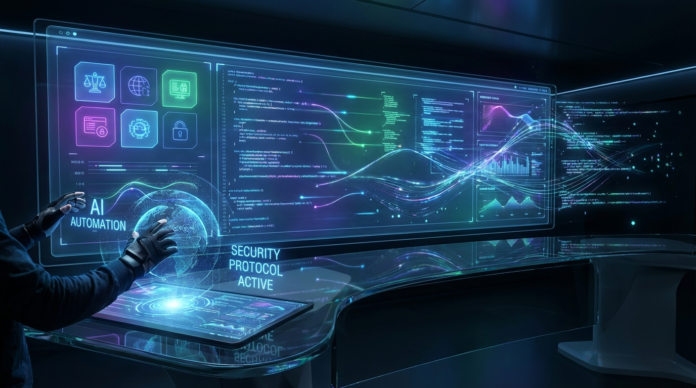


AI automation is fundamentally transforming how computers are controlled and secured, unlocking new efficiencies and operational capabilities across industries. As enterprises increasingly adopt AI-driven systems, the integration of AI computer control and AI security solutions has become critical to harnessing the technology’s potential while safeguarding against emerging cyber risks.
Central to this shift is Claude, an evolving AI automation platform renowned for its ability to manage complex computer processes autonomously. Claude’s computer control capabilities showcase how AI can optimize routine tasks and enhance decision-making with minimal human intervention. This aligns with broader trends where automation platforms streamline workflows, reduce manual errors, and significantly cut operational costs, as detailed in the comprehensive guide to Claude’s computer use trends.
Real-world applications of AI automation now span diverse sectors—from manufacturing and logistics to customer service and finance. AI computer control systems enable predictive maintenance, dynamic resource allocation, and enhanced customer interactions through intelligent automation. Technical workings behind these systems often involve layers of machine learning models, natural language processing, and real-time data analytics that work in concert to anticipate needs and respond adaptively.

The tangible benefits of AI automation include improved operational efficiency, faster processing times, and greater scalability. However, limitations persist, such as integration complexity with existing IT infrastructure and the learning curve organizations face during adoption. Notably, some users have expressed the challenge of fully trusting autonomous systems without clear visibility into AI decision processes. This underscores the importance of transparency and explainability in AI computer control frameworks.
Addressing security has become an indispensable part of implementing AI automation. Threat vectors evolve as AI systems become targets for sophisticated attacks, necessitating stringent AI security protocols. Leading practices outlined by Sysdig emphasize multi-layered defenses, the application of zero-trust models, continuous monitoring, and incident response readiness tailored to AI environments. These measures help mitigate risks like data poisoning, model theft, and adversarial manipulations that could compromise automated operations.Expert AI security best practices provide a framework for organizations to align their defenses with evolving threats.
A significant topic in AI automation discourse is ethical and regulatory compliance. As automation increasingly dictates crucial business functions, frameworks are emerging to ensure responsible AI deployment that respects user privacy, reduces bias, and maintains accountability. Scholarly work such as recent studies in the Journal of Automation Science offers insights into how these frameworks are shaping practical AI security policies and governance models.Research on ethical AI automation identifies key approaches to balancing innovation with oversight.
Implementing AI automation effectively requires a phased approach: starting from pilot projects, moving towards scaled deployment while integrating feedback and addressing compliance checkpoints. It is also crucial to leverage cross-platform compatibility to enable AI systems to integrate fluidly with existing software and hardware ecosystems. For instance, organizations adopting CoWork AI tools have reported quantifiable productivity gains, revealing practical examples of AI computer control success that go beyond anecdotal time savings.
Looking ahead, the future of AI automation points to even more sophisticated autonomy, augmented intelligence that collaborates with human oversight, and stronger security frameworks. Emerging trends suggest tighter integrations with edge computing and cloud native environments, as well as increasing emphasis on democratizing these technologies to broaden user access. The evolving landscape illustrated in the future outlook for AI-driven computer control highlights both opportunities and challenges operators will face.
In sum, AI automation stands as a revolutionary force reshaping how computers are managed and secured. By combining advanced AI computer control techniques with robust AI security practices, organizations can unlock unprecedented efficiencies while managing the ethical and operational risks. As adoption accelerates, continued innovation and rigorous governance will be critical in realizing the full potential of AI automation.