



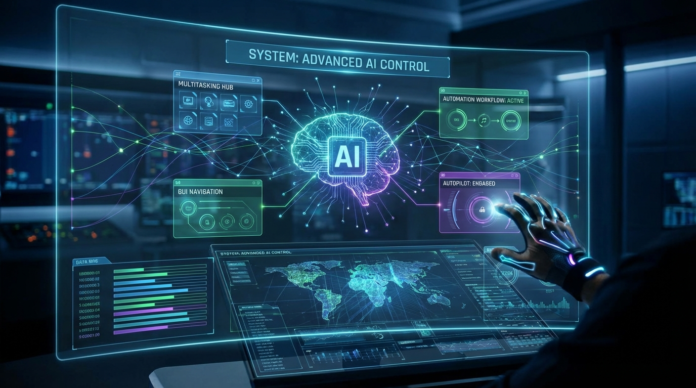


Claude computer use marks a pivotal advance in autonomous AI interaction technology, transforming how users engage with computers through seamless control and multitasking capabilities. This breakthrough is embodied in versions such as Claude 3.5 Sonnet, which stands out for its enhanced screen interaction and desktop control, enabling sophisticated mouse and keyboard operations previously unattainable in AI assistants.
At its core, Claude computer use leverages a blend of advanced algorithms and intuitive interfaces that allow AI not only to respond to commands but to autonomously navigate complex tasks across multiple applications. This involves executing workflows that range from data entry in spreadsheets and form completion to remote system management. Detailed guides for setup on both desktop and mobile platforms help developers and tech enthusiasts unlock the full potential of these features, including access to API beta environments for experimental integrations. Interested users can explore these in-depth technical guides, such as those offered in the AI SDK computer use guide.
The practical applications of Claude computer use extend into productivity automation and software development workflows, where the ability to automate repetitive tasks enhances efficiency. For instance, the system’s multitasking functionality allows simultaneous error handling and task execution—a crucial improvement over earlier AI models that required manual intervention for error resolution. Experts note that “this level of autonomous multitasking represents a crucial step towards more intelligent assistant systems capable of managing complex user environments.” Articles on smart computer automation provide examples of task automation in diverse industries, from finance to healthcare, illustrating real-world impacts.

Alongside these benefits, Claude computer use introduces challenges related to ethical AI deployment, security safeguards, and the labor market. The ethics of AI automation are critical, especially as autonomous systems gain access to sensitive data and perform actions with limited human oversight. Discussions around these concerns are covered comprehensively in AI ethics frameworks, emphasizing responsible implementation and privacy protection measures. Furthermore, new multi-agent AI systems, expanding on Claude’s architecture, promise more complex collaborative interactions while posing fresh ethical dilemmas.
Technical implementation details clarify these concerns by prioritizing transparency and safety protocols during setup. For example, developers are encouraged to integrate safeguard configurations during the initial API beta testing, ensuring robust error handling and safeguarding against unintended system commands. Step-by-step setup instructions also highlight how users can calibrate permissions and access levels to align with their security policies.
The future trends of Claude computer use point towards tighter integration with broader AI ecosystems and enhanced voice-controlled operation. Voice search optimization is becoming an important aspect, enabling more natural, hands-free interaction modes that suit environments where screen use is constrained. Additionally, the convergence of Claude with coworking AI technologies is reshaping the landscape of computer control, as detailed in how CoWork AI innovations are ushering in new collaborative workflows. These innovations suggest a trajectory where AI seamlessly supports cross-device and multi-user tasks, maximizing productivity across contexts.
Benchmark performance of Claude 3.5 Sonnet confirms it as a front-runner in this domain, balancing speed, accuracy, and reliability more effectively than competing solutions. Specialized benchmarks focusing on application responsiveness and error recovery demonstrate Claude’s readiness for enterprise deployment. This technological leadership sets a new standard in autonomous AI computer use and signals broader adoption potentials.
Claude computer use is also shifting perceptions about the future of work and automation. As AI increasingly handles complex digital workflows, questions arise about job displacement versus augmentation. According to recent studies on AI’s role in research and development automation, as cited by RAND Corporation, the growth of autonomous AI systems like Claude could lead to significant shifts in labor dynamics, requiring new policies and workforce training.
For those seeking to understand or implement Claude computer use, consulting detailed implementation case studies and visual demos is invaluable. They provide tangible insights into how theoretical features translate into operational advantages. Moreover, connecting the dots between Claude’s capabilities and ethical frameworks reinforces a balanced approach to embracing AI’s potential.
Overall, Claude computer use propels a new era in AI-driven computer interaction by enhancing user control, multitasking, and task automation while foregrounding critical ethical considerations. Stakeholders in tech development and end-users alike must navigate this evolving landscape with informed strategies, balancing innovation with responsibility. Resources such as the future of AI that controls your computer offer further context on how this technology is developing and shaping digital interfaces.