
Proven way to grow Areca palm in 3 steps


Have you ever walked into a room with an Areca palm and instantly felt a sense of tropical tranquility wash over you? This elegant palm, with its graceful arching fronds, has become one of the most popular indoor plants for good reason.
Table of Contents
Growing an Areca palm at home is not just aesthetically pleasing but also improves air quality by removing toxins. The good news is that with proper care and propagation techniques, you can enjoy this stunning tropical beauty in your own space without much hassle.
Materials & Supplies
To successfully grow an Areca palm, you’ll need:
1. Young Areca palm plant – Look for a healthy specimen with multiple stems
2. Well-draining potting soil – A mix designed for palms or a combination of regular potting soil with perlite and sand
3. Planter with drainage holes – Preferably terracotta or ceramic to prevent waterlogging
4. Watering can – With a narrow spout for controlled watering
5. Spray bottle – For misting the fronds
6. Pruning shears – Clean and sharp for removing damaged fronds
7. Liquid fertilizer – Balanced, water-soluble formula for houseplants
8. Humidity tray – Optional but beneficial for maintaining moisture
9. Plant stake – For supporting taller specimens if needed
10. Light meter – Optional but helpful for monitoring light conditions
Timing / Growing Schedule
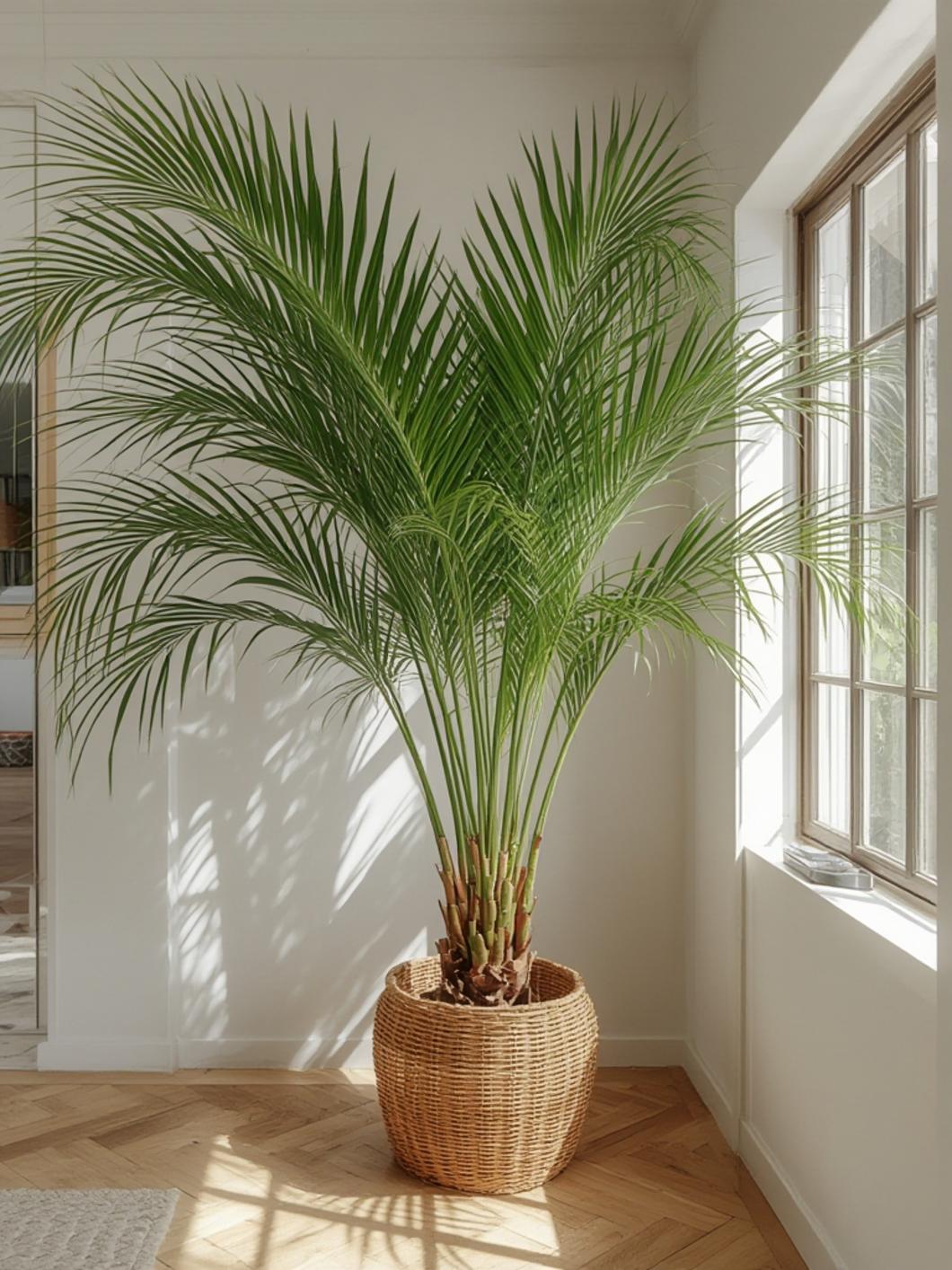
Areca palms are slow to moderate growers that require patience. When starting with a young plant:
– Initial establishment: 1-2 months for the plant to adjust to its new environment
– Growth rate: Expect 6-10 inches of growth per year in optimal conditions
– Maturity timeline: 3-4 years to reach a full, bushy appearance (4-6 feet tall indoors)
– Repotting frequency: Every 2-3 years, ideally in spring
– Fertilizing schedule: Monthly during spring and summer, none during winter
Unlike fast-growing plants like bamboo, Areca palms give you time to adjust care routines and learn their preferences.
Step-by-Step Instructions

1. Select the right location: Place your Areca palm in bright, indirect light. Direct sunlight can scorch the leaves, while too little light causes leggy growth.
2. Prepare the container: Choose a pot 2-3 inches larger than the current root ball with good drainage holes. Add a layer of gravel at the bottom.
3. Plant properly: Fill the container 1/3 with palm soil mix. Position the Areca palm at the same depth it was previously growing and fill around it with soil.
4. Establish watering routine: Water thoroughly when the top inch of soil feels dry. Allow excess water to drain completely. The Areca palm appreciates consistent moisture but suffers in soggy conditions.
5. Maintain humidity: Mist the fronds regularly or use a humidity tray, especially in dry indoor environments or during winter heating season.
6. Fertilize appropriately: Apply a balanced liquid fertilizer diluted to half strength once a month during the growing season (spring through early fall).
7. Monitor for pests: Regularly inspect for spider mites, mealybugs, and scale insects, particularly on the undersides of fronds.
8. Consider propagation: Once established, you can propagate your Areca palm by carefully dividing the root ball during repotting to create new plants.
Nutritional Benefits / Advantages
Areca palms offer numerous benefits beyond their beauty:
– Air purification: Removes formaldehyde, xylene, and toluene from indoor air
– Humidity boosting: Naturally increases air moisture through transpiration, beneficial for respiratory health
– Stress reduction: Studies show that indoor plants like the Areca palm reduce psychological and physiological stress
– Productivity enhancement: Can improve concentration and productivity by up to 15% in work environments
– Aesthetic value: Creates a tropical, resort-like atmosphere in any space
Tips, Alternative Methods, or Gardening Advice
– For small spaces: Opt for dwarf varieties that stay under 4 feet tall
– For low-light areas: While not ideal, Areca palms can tolerate moderate low light; rotate regularly to ensure even growth
– For beginners: Start with a medium-sized established plant rather than a very young one
– Regional adaptation: In humid climates, reduce misting; in dry areas, increase humidity measures
– Seasonal care: Reduce watering in winter by about 50% compared to summer needs
– Growth technique: Cluster multiple plants together for a fuller appearance
Common Mistakes to Avoid
1. Overwatering: The most common killer of Areca palms. Wait until the top inch is dry before watering again.
2. Using tap water: Fluoride and chlorine can cause brown leaf tips. Use filtered, distilled, or rainwater if possible.
3. Ignoring humidity needs: Dry air leads to brown tips and leaf edges. Maintain 40-60% humidity.
4. Frequent repositioning: Areca palms dislike being moved often. Find a good spot and let it adapt.
5. Over-fertilizing: This can burn the roots. Always use half-strength fertilizer and skip winter months.
Storage / Maintenance Tips
– Pruning: Remove only yellow or brown fronds at the base using clean shears
– Cleaning: Wipe leaves gently with a damp cloth monthly to remove dust
– Winter care: Move away from cold drafts and reduce watering by half
– Repotting: When roots circle the container or growth slows, repot in spring
– Leaf trimming: Never cut brown tips in a straight line; follow the natural leaf shape
– Root care: If roots emerge from drainage holes, it’s time to repot
Conclusion
Growing an Areca palm at home brings a touch of tropical elegance and significant air-purifying benefits to any space. With proper care, consistent watering, and attention to humidity, your palm can thrive for many years. The joy of watching this graceful plant grow and potentially sharing new plants through propagation makes the effort worthwhile. Start your Areca palm journey today, and transform your home into a refreshing tropical haven!
FAQs
How often should I water my Areca palm?
Water when the top inch of soil feels dry to the touch, typically every 7-10 days depending on your home’s environment and the season.
Why are the leaf tips of my Areca palm turning brown?
Brown leaf tips usually indicate low humidity, fluoride in tap water, or inconsistent watering. Increase humidity, use filtered water, and maintain a regular watering schedule.
Can Areca palms survive in low light conditions?
While they can tolerate moderate low light, Areca palms grow best in bright, indirect light. In low light, growth will slow, and the plant may become leggy and prone to pest problems.
How do I know when to repot my Areca palm?
Repot when you notice roots circling inside the pot or coming out of drainage holes, growth has slowed significantly, or water runs straight through without being absorbed. Usually every 2-3 years.
Is the Areca palm safe for pets?
Yes, the Areca palm is non-toxic to cats and dogs according to the ASPCA, making it a pet-friendly choice for indoor greenery.